The Dragon Ascendant: Gateway Guide to Mito HollyHock
Mito HollyHock is more than just a football club; it is the resilient heartbeat of Ibaraki Prefecture and a vital finishing school for Asian football. For over a quarter of a century, the club has operated as a gateway, refining raw potential into professional steel and salvaging careers destined for global stages. Built on a foundation of community grit and the storied legacy of the Tokugawa Shogunate, the club defines itself through survival and a refusal to yield. After decades of patient development in the second tier, the Dragon has finally ascended, bringing its unique blend of feudal history and modern tactical discipline to the summit of the Japanese game.
Context: The J.League Pyramid
Mito HollyHock competes in the Meiji Yasuda J1 100 Year Vision League, the highest echelon of professional football in Japan. Their 2025 promotion marked the end of a record-breaking 26-year tenure in the second division, signaling a new era for the club.
Explore More: To learn about the history, structure, and competing teams of Japan’s premier football competition, visit our J.League Hub.
Philosophy & Identity: The Shogun’s Spirit
The club’s identity is a fascinating blend of industrial heritage and feudal prestige. Founded in 1990 as a corporate team for Prima Ham factory workers, the club was reborn as a community-driven shimin club following the 1997 Asian Financial Crisis.
The Crest and the Botanical Mystery
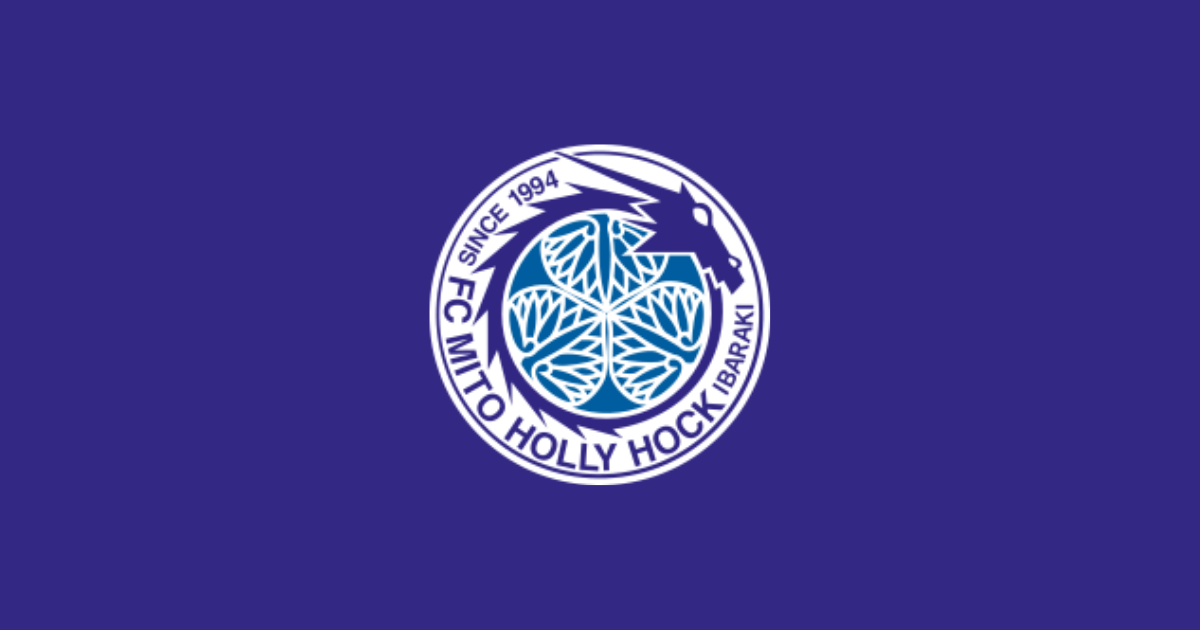
The HollyHock name and crest are derived from the Mitsuba-aoi (Triple Hollyhock) seal of the Tokugawa Clan, who ruled Japan for over 250 years from their power base in Mito. Interestingly, the name is a slight botanical error; the crest actually depicts wild ginger leaves, but the club has fully embraced the HollyHock moniker. This allows the team to borrow the immense authority of the Shogunate, transforming every match into a quest for regional rectification and pride.
The “Natto” Fortress: K’s denki Stadium
The home ground, K’s denki Stadium Mito, offers an atmosphere unlike any other in the world. The experience is defined by Natto (fermented soybeans), the local specialty. Fans celebrate the stickiness of the beans as a metaphor for the team’s defensive resilience—difficult to shake off and stubbornly persistent. The stadium stands as a symbol of civic pride, having been meticulously restored after sustaining severe damage during the 2011 Great East Japan Earthquake.
The Defining Rivalry: The Ibaraki Derby
The ultimate test for any Mito supporter is the Ibaraki Derby against Kashima Antlers. This is a clash of polar opposites: Kashima is the royalty of Japanese football, a trophy-laden powerhouse built on the legacy of the Brazilian legend Zico. Mito, by contrast, is the gritty, working-class neighbor that has spent decades in the shadows.
The Traumatic Motivation
For 26 years, Mito was the other team in the prefecture, unable to reach the top flight while Kashima collected titles. This period of stagnation became the club’s DNA, fueling a decades-long pursuit of their prestigious neighbors. The first J1 derby, scheduled for April 4, 2026, represents the culmination of this odyssey—a chance for the gateway club to finally stand toe-to-toe with the giants.
Historical Eras
The Pioneer Era (1990–1999)
This era was defined by the club’s corporate roots as Prima Ham FC. After ascending through the regional tiers, the team faced extinction in 1997 when their corporate parent withdrew funding during the economic crisis. A desperate merger with FC Mito saved the club, leading to a 1999 breakthrough where they finished 3rd in the JFL to secure a spot in the professional J.League.
The Modern Era: The Miracle (2000–2025)
Mito became the quintessential J2 club, holding the world record for the longest continuous spell in a second division. Under the gateway philosophy, they survived on a shoestring budget by developing stars for other clubs. This era peaked with the 2025 Miracle Season where, under manager Naoki Mori, Mito won the J2 title on the final day via goal difference, ending their quarter-century wait for top-flight football.
Honours Table
Title
Year(s)
J2 League Champions
2025
Japan Football League (JFL) 3rd Place (Promotion)
1999
Regional League Playoff Runners-up
1996
Key Players & Legends
Koji Homma (The Gatekeeper): A true icon who stayed with the club for 26 seasons (1999–2024). He holds the record for J2 appearances and saw the club through its darkest financial days and the 2011 earthquake.
Marcus Tulio Tanaka (The Defensive Striker): A legendary “libero” who used a 2003 loan spell at Mito to score 10 goals as a center-back, proving the club could manufacture World Cup-level superstars.
Holly-kun (The Mythic Guardian): The club’s dragon mascot. Representing the water deities of Ibaraki’s agriculture, he symbolizes the technical skill and regional roots of the club.
Arata Watanabe (The Title Architect): The spearhead of the 2025 promotion campaign. His 13 goals and tireless pressing were the engine behind Mito’s historic title win.Daizen Maeda (The Sonic Forward): The 2017 gateway success story. His blistering speed was refined at Mito, propelling him to Celtic FC and the Japanese National Team.
Conclusion: The Gateway Opens
Mito HollyHock enters the 2026 season as a survivor of history. They have weathered economic collapses, natural disasters, and decades of mockery to finally earn their place among the elite. By sticking to their gateway philosophy—strategic loans and developing undervalued talent—they have built a squad capable of defying the odds. As they prepare for the 2026 J1 challenge, the goal is simple: survival. For Mito, the gateway is no longer just a path for others; it is finally the destination.
Follow Mito in their J1 League journey in our dedicated Kyoto Sanga Club Hub.